A1-compatible
Hardened Steel Hotend Kit
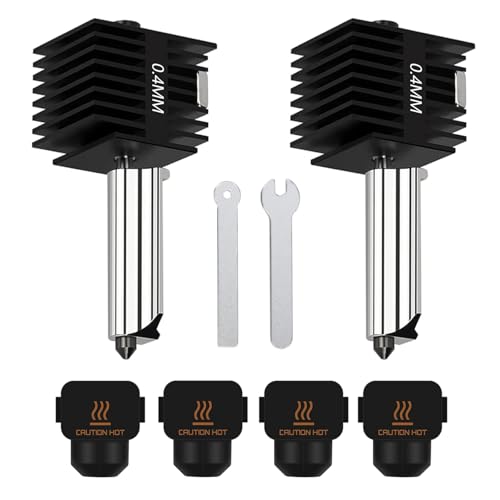
A hardened steel A1-compatible hotend is a small Print Climate move with a clear job: protect the nozzle path before abrasive filament turns into a troubleshooting spiral. It belongs in the plan for PLA-CF, PETG-CF, glow, wood, or other hard-particle spools, but it does not make an A1 into an enclosed engineering-material printer.
Street check
$28
Decision snapshot
What this product actually solves
Print Climate reviews gear by the missing condition: drying, storage, enclosure control, resin boundaries, or abrasive hardware readiness.
8.4
fit score
Buy it for
- Turns abrasive-filament curiosity into a planned upgrade instead of a ruined brass nozzle surprise.
- Low-cost, high-leverage fit for compatible A1 and A1 Mini owners who want carbon fiber, glow, wood, or filled materials.
- Better to install before the first abrasive roll than after extrusion quality has already degraded.
Check first
- This Amazon pick should be treated as third-party compatible unless the seller provenance is verified; buyers who want official Bambu hardware should buy direct.
- A hardened hotend does not solve moisture, clogging from bad filament, or wrong temperature settings.
- Users still need to confirm A1/A1 Mini fit, nozzle diameter, and slicer profile before printing filled materials.
At a Glance
Best For
Fit check
Before this belongs in the cart
The right purchase should remove one specific workshop constraint. Use these checks before clicking through to Amazon.
Confirm
- The module is truly compatible with your A1 or A1 Mini hotend system.
- You know whether 0.4 mm or 0.6 mm hardened steel fits the filament maker's guidance.
- The slicer and printer profile will be updated after the swap.
- You are buying for abrasive wear, not moisture, chamber heat, or ventilation.
Pair with
- A dryer and sealed box for PLA-CF, PETG-CF, glow, wood, and other filled materials.
- Official Bambu A1-series hardened hotend hardware if verified provenance matters.
- Small calibration prints before a large abrasive job.
Skip if
- The failures are popping, hissing, or brittle filament symptoms.
- You only print standard PLA or PETG.
- The plan is ABS, ASA, PC, PA, or high-fill engineering filament on an open-frame A1 setup.
Bench note
Overview
An A1/A1 Mini-compatible hardened steel hotend is not a climate product in the narrow sense, but it belongs on Print Climate because abrasive-filament readiness is a system. Carbon fiber, glass fiber, glow, wood, and other hard-particle filaments can fail from moisture and can also wear the wrong nozzle. Solving only one layer gives the buyer a false sense of control.
This Amazon pick should be treated as compatible hardware unless seller provenance is verified. Buyers who want official Bambu hardware should buy the A1-series hardened steel hotend directly from Bambu. Either way, the buying logic is the same: install hardened steel before the first abrasive roll, then dry and store the filament correctly.
The limitation is scope. A hardened hotend does not turn an A1 or A1 Mini into an enclosed engineering-material printer. It protects the nozzle path for appropriate particle-filled filaments; it does not solve chamber-temperature limits, damp filament, poor storage, or slicer settings.
The conversion angle is prevention. Nozzle wear is invisible until it becomes bad extrusion, rough walls, weak parts, or a failed long print. A small hotend purchase before the first abrasive spool is easier to justify than replacing parts after the buyer has already wasted material. It is a readiness part, not a performance trophy.
Pros & Cons
Pros
- Turns abrasive-filament curiosity into a planned upgrade instead of a ruined brass nozzle surprise.
- Low-cost, high-leverage fit for compatible A1 and A1 Mini owners who want carbon fiber, glow, wood, or filled materials.
- Better to install before the first abrasive roll than after extrusion quality has already degraded.
- Pairs with dry storage because many abrasive materials are also moisture-sensitive.
Cons
- This Amazon pick should be treated as third-party compatible unless the seller provenance is verified; buyers who want official Bambu hardware should buy direct.
- A hardened hotend does not solve moisture, clogging from bad filament, or wrong temperature settings.
- Users still need to confirm A1/A1 Mini fit, nozzle diameter, and slicer profile before printing filled materials.
Design & Build Quality
A1-style hotend kits are attractive because they are printer-specific. On tightly integrated printers, a correct-fit hotend is usually better than a generic nozzle box. The buyer is paying for compatibility, clean installation, and a known module shape.
The hardened steel wear surface is the important build feature. Abrasive blends can damage softer nozzles, especially over longer prints or repeated rolls. A hardened kit protects against that wear, but users still need to choose the right nozzle diameter and profile for the material. For broader carbon- or glass-filled materials, a 0.6 mm hardened nozzle is often the safer anti-clog direction than forcing everything through 0.4 mm.
Build quality also includes seller confidence. Official Bambu parts remove ambiguity around machining, thermistor fit, heater behavior, and firmware expectations. A third-party compatible kit can still be the right budget buy, but the buyer should inspect packaging, nozzle marking, thread fit, and the first heat cycle instead of assuming every A1-compatible listing is identical.
Performance & Specifications Deep Dive
The performance gain is durability, not speed. A hardened hotend resists abrasive particles from carbon fiber, glass fiber, glow, wood, and similar filled filaments. That can preserve extrusion consistency and dimensional results over time.
For A1 and A1 Mini users, the fit question matters more than a generic spec list. The hotend should match the printer model, the nozzle diameter should match the material, and the slicer profile should be updated after installation. Official Bambu guidance treats hardened steel as required for CF/GF-style materials, while also keeping A1/A1 Mini expectations conservative for materials that normally need enclosed printers.
Moisture remains separate. Many abrasive materials are also moisture-sensitive. If the print is rough, popping, or weak, the problem may be wet filament, nozzle wear, slicer settings, or all three.
A useful way to frame performance is failure prevention per spool. One roll of filled filament can be more expensive than the hotend, and a worn nozzle can keep degrading ordinary prints after the abrasive job is done. That makes hardened steel a low-cost insurance part for owners who are already buying specialty filament. It is not a cosmetic upgrade, and it should not be sold as one.
Software & User Experience
The user experience depends on installation clarity and profile discipline. After swapping the hotend, the user should confirm nozzle type and size in the printer or slicer profile, then run a small calibration print before trusting a large carbon-fiber job.
This is also a good place for Print Climate to reduce buyer regret. A hardened hotend is not permission to ignore material guidance. The user still needs drying time, appropriate temperature, slower speed when required, and spool storage. Avoid 0.2 mm nozzles for particle-filled filament.
The best workflow is staged. Install the hotend, confirm the printer recognizes the expected nozzle setup, run a normal material test, then run a short abrasive-material calibration before a long part. If a problem appears, the buyer can separate installation issues from moisture issues instead of changing five variables at once.
A good review page should also tell buyers what the upgrade will not feel like. The printer may not suddenly print faster, quieter, or cleaner on ordinary PLA. The payoff is quieter in the short term: fewer future wear variables, fewer suspicious partial clogs, and more confidence that specialty filament is failing from moisture or settings rather than a damaged nozzle.
Real-World Use Cases
The strongest use case is the A1 owner preparing for PLA-CF, PETG-CF, glow filament, wood-fill, or other abrasive materials that fit the printer's practical limits. Installing hardened steel before the first roll prevents the frustrating pattern of good early prints followed by mystery under-extrusion.
It also fits small-printer owners who want one practical upgrade without buying a new printer. A hardened hotend plus a compact dryer can open more materials than a decorative accessory would.
The weak use case is basic PLA and PETG. If the user never prints abrasive materials, the kit may not change their results. If the plan is ABS, ASA, PC, PA, or high-fill engineering filament, the bigger limitation is the open-frame printer environment, not only the nozzle.
A realistic Print Climate stack for an A1 bench is this hotend, a dryer for the specialty spool, and a labeled storage box for the leftovers. That stack answers the actual failure chain: a nozzle that can survive the particles, filament that is not wet, and storage that keeps the next job from starting worse than the first.
Who Should Buy (And Who Shouldn't)
Buy it if the user owns a compatible A1 or A1 Mini and plans to print abrasive or filled filament. It is also smart for buyers who want to prepare the printer before a first carbon-fiber, glass-fiber, glow, or wood-fill roll.
Skip it if the printer is not compatible, if the user prints only normal PLA/PETG, or if current failures are clearly moisture symptoms. In that case, dry the spool first and upgrade the hotend only when material choice demands it.
The buyer should also skip the Amazon-compatible route if provenance matters more than price. Official parts cost more in some carts, but they reduce uncertainty. That is a rational trade when the printer is used for paid parts, classroom jobs, or long unattended print queues.
The cleanest buyer profile is the hobbyist who has already chosen a filled filament and wants the printer ready before opening the bag. The weakest profile is the buyer hoping a hotend will rescue generic stringing, bubbling, or bed adhesion problems. Those symptoms belong in a moisture and tuning diagnosis first.
Alternatives Worth Considering
Official Bambu A1-series hardened hotends are the cleaner route when buyers want verified provenance. A larger hardened nozzle is worth considering for some filled materials, especially when the filament maker recommends it. Printer-specific official or trusted-compatible kits are preferable to random nozzle packs for A1 owners.
For moisture-driven failures, the SUNLU S2, Creality Dryer Box 2.0, or Polymaker PolyDryer Box are more relevant. The right abrasive-filament stack is hardened hotend plus dry material plus conservative print settings.
For users who have not bought the specialty filament yet, the alternative is waiting until the material choice is known. The nozzle diameter, dryer temperature, and storage plan should follow the filament maker's guidance. Buying a hardened kit is smart; buying the wrong diameter before the spool is selected is avoidable friction.
Our Verdict
A hardened steel A1-compatible hotend is a small Print Climate move with a clear job: protect the nozzle path before abrasive filament turns into a troubleshooting spiral. It belongs in the plan for PLA-CF, PETG-CF, glow, wood, or other hard-particle spools, but it does not make an A1 into an enclosed engineering-material printer.
| Full Specifications | |
|---|---|
| Category | Hotend upgrade |
| Role | Abrasive filament protection |
| Max Temp | 300C |
| Capacity | 1 printer |
| Active Heat | No |
| Active Airflow | No |
| Humidity Readout | No |
| Print Through | No |
| Ventilation | No |
| Resin Workflow | No |
| Abrasive Ready | Yes |
| Best Materials | PLA-CF, PETG-CF, glow, wood-filled |
| Footprint | Printer part |
Frequently Asked Questions
Do I need a hardened hotend for carbon-fiber filament?
Will this fix wet filament?
Is this useful for normal PLA?
Should I change slicer settings after installing it?
Does this make the A1 ready for ABS, ASA, PC, or PA-CF?
What should I buy with it?
Should I buy official Bambu or this compatible Amazon kit?
What nozzle diameter should I choose for filled filament?
Related Buying Guides
Compare With Similar 3D Printer Environment Upgrades
Head-to-Head Comparisons
A1/A1 Mini-Compatible Hardened Steel Hotend Kit
$28
Prices may change - check current Amazon listing.