Generic
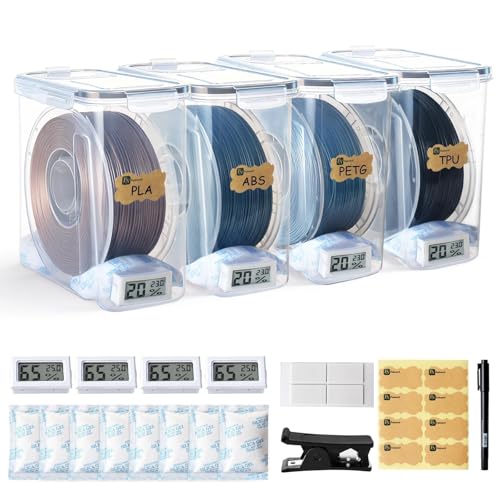
4-Pack Dry Storage Boxes
A four-pack of hygrometer dry boxes is the least glamorous product on the list and one of the highest-leverage fixes. If you own several partial PETG or PLA+ rolls and keep finding them exposed on a shelf, buy storage before chasing another slicer profile.
Street check
$38
Decision snapshot
What this product actually solves
Print Climate reviews gear by the missing condition: drying, storage, enclosure control, resin boundaries, or abrasive hardware readiness.
8.1
fit score
Buy it for
- Best cost-per-spool option for organizing partial rolls, backup colors, and seasonal materials.
- Hygrometers turn dry storage from a guess into a visible maintenance loop.
- Useful even after buying a premium dryer because active drying without sealed storage wastes the cycle.
Check first
- No active heat: this prevents re-wetting but does not rescue already wet filament.
- Generic boxes need inspection for gasket quality and lid fit before trusting expensive nylon or PA-CF.
- Can create a false sense of security if the desiccant is not recharged or replaced.
At a Glance
Best For
Fit check
Before this belongs in the cart
The right purchase should remove one specific workshop constraint. Use these checks before clicking through to Amazon.
Confirm
- The problem is open-spool chaos across several partial rolls.
- You understand these are storage boxes, not active dryers.
- You will inspect gasket fit, latch pressure, and hygrometer behavior after arrival.
- The boxes can live near the printer so returning filament is easy.
Pair with
- A compact dryer for any spool that already pops, hisses, or strings from moisture.
- Fresh rechargeable desiccant and visible indicator beads.
- A boring label format: material, dried date, desiccant status, ready or not ready.
Skip if
- You need a polished print-through path for specialty materials.
- You are storing expensive nylon or PA-CF that deserves a dedicated premium box.
- You expect a sealed box to rescue a wet spool without heat.
Bench note
Overview
A four-pack of filament storage boxes is the unglamorous product that often creates the biggest change in a messy print room. Many users do not have a drying problem first. They have an open-spool problem: partial rolls on shelves, mystery material, exhausted desiccant, and no visible humidity data.
This generic four-pack earns its place because it fixes the cost-per-spool problem. A premium dry box for every roll gets expensive fast. A budget pack with hygrometers gives the buyer enough containers to change the habit across the whole bench. That is the correct promise: storage capacity and visibility, not miracle drying.
The page must be clear about the limitation. These boxes are storage, not active dryers. They help maintain a dry state after a proper cycle; they do not reliably rescue wet PETG or nylon by themselves.
The best buyer already has or plans to buy one active dryer, then needs enough sealed boxes to stop undoing that dryer work. If the same PETG roll strings again two days after drying, the dryer probably did its job. The shelf did not. Storage is what makes drying compound over time, roll by roll.
Pros & Cons
Pros
- Best cost-per-spool option for organizing partial rolls, backup colors, and seasonal materials.
- Hygrometers turn dry storage from a guess into a visible maintenance loop.
- Useful even after buying a premium dryer because active drying without sealed storage wastes the cycle.
- Low-risk budget pick for garages and basements where ambient humidity shifts week to week.
Cons
- No active heat: this prevents re-wetting but does not rescue already wet filament.
- Generic boxes need inspection for gasket quality and lid fit before trusting expensive nylon or PA-CF.
- Can create a false sense of security if the desiccant is not recharged or replaced.
Design & Build Quality
The physical design is simple: sealed individual boxes, visible hygrometers, and enough capacity for a small filament library. Because this is a generic product category, buyers should inspect gasket fit, latch pressure, hygrometer placement, and spool clearance as soon as the boxes arrive.
The lower price means consistency can vary. That is acceptable if the use case is broad storage for PLA, PETG, and backup spools. For expensive nylon or carbon-fiber materials, a more purpose-built box may be worth the extra cost.
The quality check should happen before the boxes become part of the workflow. Put a hygrometer and charged desiccant inside, close the lid, and check the reading after a day. If one box never drops while the others do, that box becomes PLA overflow, not the nylon box. Budget storage works best when the user is willing to grade each container instead of trusting the listing photo.
Performance & Specifications Deep Dive
The key spec is four-spool capacity at a low price. That changes behavior. A single premium box protects one priority roll; a four-pack can stop the whole shelf from becoming exposed inventory.
Hygrometers are the conversion feature. They make storage visible. If a box climbs in humidity, the user knows to refresh desiccant, reseat the lid, or move the spool. Without that feedback, dry storage turns into faith.
The missing spec is active heat. That is why the page should pair this product with a dryer. Dry the material in an S2, S4, Space Pi, or similar unit, then store the spool here. If the spool is wet before it enters the box, the box can only slow the damage.
For PETG and TPU, the performance goal is not a specific lab humidity number. The useful goal is repeatability: the same spool should behave the same next week as it did after the dry cycle. If the boxes keep readings stable and the labels show when a spool was last dried, the user has a simple control loop that beats guessing at retraction every time a print gets fuzzy.
Software & User Experience
There is no software, but there is a system. The best user experience comes from labels: material, brand, last dried date, desiccant status, and print-through readiness. Print Climate should encourage a boring label because boring systems survive busy print days.
The boxes also reduce friction by making the correct habit nearby. When storage sits next to the printer, the user is more likely to return the spool immediately after a job. When storage is in a closet, the spool stays open.
The mistake is making the system too clever. A spreadsheet, QR labels, and color-coded desiccant charts can be satisfying, but most hobby benches need five seconds of friction removed. A strip of painter tape that says `PETG, dried May 31, desiccant fresh` is enough. The product converts when the buyer sees that dry storage can be a habit, not another maintenance project.
A second habit matters too: quarantine the problem spool. If one roll keeps climbing in humidity or printing poorly, mark it instead of returning it to the same rotation. Cheap boxes give the user enough containers to separate suspect material from trusted material.
Real-World Use Cases
The best use case is a garage or basement bench with several partial PETG and PLA+ rolls. Seasonal humidity can make the same profile behave differently month to month, and visible storage gives the user a cheap first control layer.
It is also a strong second purchase after a dryer. Once the user proves moisture was part of the problem, the four-pack prevents the same spool from becoming a repeat offender.
The weak use case is print-through specialty material control. Generic boxes may not feed as cleanly as purpose-built products, and some users will need tubing or spool path adjustments. Treat them as storage first, not as a premium print station.
The four-pack also works for color organization. A hobbyist with red PETG, black PLA+, white TPU, and a half-used silk PLA roll can finally separate materials by sensitivity instead of by where they happened to land on the shelf. That matters because one wet TPU spool can waste more time than the entire storage kit costs.
Who Should Buy (And Who Shouldn't)
Buy the four-pack if the bench has several open rolls and no storage discipline. It is especially good for users who need a low-cost way to organize partial spools before they invest in a larger dryer.
Skip it if the buyer expects active drying, if the materials are mostly expensive engineering blends, or if each roll needs a polished print-through path. In those cases the PolyDryer Box or a drying station is a stronger fit.
This is also the right buy for someone who keeps chasing slicer changes after a roll sits open. If a profile works right after opening a spool and then gets worse after storage, the setup needs containment and visibility. If the profile is bad on fresh filament too, storage boxes are not the first fix.
Alternatives Worth Considering
The Polymaker PolyDryer Box is the premium storage alternative for priority materials and cleaner print-through use. The SUNLU S2 or Creality Filament Dryer Box 2.0 are better first purchases if the spool is already wet.
The SUNLU S4 is the larger station when several active spools need heat and access during printing. It costs much more, but it solves a different layer of the system.
The realistic stack is not one product. For most benches it is one active dryer, several low-cost storage boxes, and one premium print-through box for the material that causes the most expensive failures. This four-pack owns the middle of that stack: cheap enough to buy in volume, visible enough to enforce the habit, and simple enough to keep near the printer.
If the buyer is choosing between this four-pack and another novelty printer accessory, the storage boxes are usually the higher-leverage buy. They make every future filament purchase easier to maintain and give the owner a place to put partial rolls before moisture turns into another troubleshooting session.
Our Verdict
A four-pack of hygrometer dry boxes is the least glamorous product on the list and one of the highest-leverage fixes. If you own several partial PETG or PLA+ rolls and keep finding them exposed on a shelf, buy storage before chasing another slicer profile.
| Full Specifications | |
|---|---|
| Category | Dry storage |
| Role | Bulk sealed storage |
| Max Temp | 0C |
| Capacity | 4 spools |
| Active Heat | No |
| Active Airflow | No |
| Humidity Readout | Yes |
| Print Through | No |
| Ventilation | No |
| Resin Workflow | No |
| Abrasive Ready | No |
| Best Materials | Stored PLA, PETG, TPU |
| Footprint | Shelf boxes |
Frequently Asked Questions
Can these boxes dry filament?
Are generic dry boxes safe for nylon?
Why buy a four-pack instead of one premium box?
What should the label say?
Where should these boxes live?
How do I know whether one box seals well enough?
Should I store filament in the original vacuum bag instead?
What is the best first stack with these boxes?
Related Buying Guides
Compare With Similar 3D Printer Environment Upgrades
Head-to-Head Comparisons
Filament Storage Box 4-Pack with Hygrometers
$38
Prices may change - check current Amazon listing.