Generic
Resin Printer Vent Enclosure
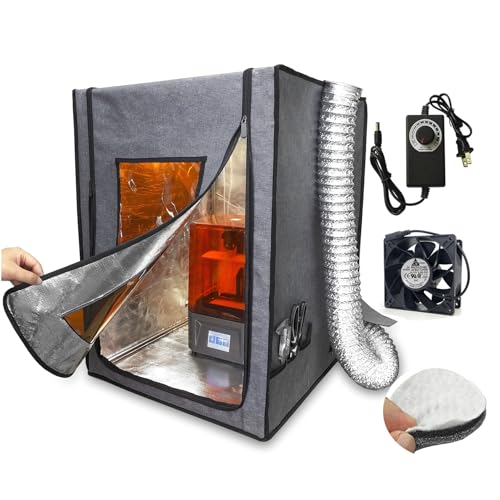
The resin vent enclosure is the right product when the real problem is not print quality but boundary control. It helps turn resin printing from a room-wide contamination risk into a defined workstation, especially when paired with proper PPE, cleanup habits, and a wash-and-cure station.
Street check
$149
Decision snapshot
What this product actually solves
Print Climate reviews gear by the missing condition: drying, storage, enclosure control, resin boundaries, or abrasive hardware readiness.
8.3
fit score
Buy it for
- Creates a clear boundary around resin printing instead of letting odor and handling creep across the whole room.
- Vent kit support is the main reason to buy it; resin workflows need source control, not only air fresheners.
- Pairs well with a wash-and-cure station because printing, washing, curing, and waste handling each need boundaries.
Check first
- Not a guarantee of safety; resin choices, gloves, eye protection, waste handling, and actual exhaust routing still matter.
- Filter-only setups should be treated as supplemental unless the manufacturer clearly defines capture and replacement rules.
- Large enclosure footprint may crowd a small apartment desk.
At a Glance
Best For
Fit check
Before this belongs in the cart
The right purchase should remove one specific workshop constraint. Use these checks before clicking through to Amazon.
Confirm
- The resin printer fits with lid removal, build plate access, and cleanup clearance.
- The fan, filter, and duct route are real, not just a product-photo promise.
- You can keep printer, wash, cure, waste, and clean-hand zones distinct.
- The enclosure will live in a dedicated workspace, not a bedroom or kitchen.
Pair with
- A wash/cure station so post-processing has a controlled dirty zone.
- A stronger inline fan and window or wall exhaust path if odor control is a serious concern.
- Nitrile gloves, eye protection, spill supplies, covered waste, and resin SDS guidance.
Skip if
- There is no responsible exhaust path.
- The printer or wash/cure station is too large for safe access.
- You want a small filter to make a shared living space acceptable for resin printing.
Bench note
Overview
A resin printer enclosure with a ventilation kit is a source-control boundary, not a guarantee of safety. That is the exact way Print Climate should sell it. The product can help define the dirty zone, support negative pressure when ducted, and keep the printer from sharing open air with the rest of the room. It cannot replace PPE, solvent management, or responsible exhaust planning.
This listing is best framed as a budget enclosure for small resin printers. It creates a physical boundary around the printer and gives buyers a starting point for fan, filter, and duct routing. The conversion pitch is not fear. It is control: put the resin process in one place and make the air path explicit.
Buyers should measure before buying. The printer, lid removal, build plate access, wash/cure station, waste containers, duct bend radius, and cleanup clearance all matter more than the product photo.
The right question is not `does this make resin safe`. The right question is `does this make my printer's dirty zone and air path more controlled than they are today`. If the answer is no, do not buy the tent and hope the filter saves the room.
Pros & Cons
Pros
- Creates a clear boundary around resin printing instead of letting odor and handling creep across the whole room.
- Vent kit support is the main reason to buy it; resin workflows need source control, not only air fresheners.
- Pairs well with a wash-and-cure station because printing, washing, curing, and waste handling each need boundaries.
- Good option when a printer cannot be moved to a garage or isolated utility space.
Cons
- Not a guarantee of safety; resin choices, gloves, eye protection, waste handling, and actual exhaust routing still matter.
- Filter-only setups should be treated as supplemental unless the manufacturer clearly defines capture and replacement rules.
- Large enclosure footprint may crowd a small apartment desk.
Design & Build Quality
The enclosure category typically uses a fabric or foil-lined shell over a collapsible frame, with ports for fan, filter, and duct routing. Research on this listing points to a roughly small-printer footprint and a lightweight build. That is useful for placement, but it is not the same as a certified lab enclosure.
The important build questions are seal quality, frame stability, fan mounting, zipper access, and whether the printer can be serviced without dragging resin across the room. Some generic enclosure listings require adapter changes or printed brackets, so buyers should inspect the actual fan mount before relying on it.
Access is part of build quality for resin. A zipper that looks fine in a photo can become frustrating if it forces the user to reach awkwardly around a wet build plate. Before buying, the user should imagine removing the lid, lifting the plate, scraping parts, moving them to wash, and closing the tent again while gloved.
Performance & Specifications Deep Dive
The most important performance concept is airflow path. A fan and filter inside the same room may reduce odor, but odor reduction is not the same as exposure control. A stronger setup ducts air outdoors or into a more appropriate local exhaust path.
Generic listings often lack published CFM, static pressure, filter test data, or filter replacement guidance. That means Print Climate should avoid claims that sound certified. The safe claim is that the enclosure can support better source control if the user plans the exhaust path and maintains the filter or duct system.
Resin itself remains a handling hazard. Uncured resin can irritate skin and eyes and may sensitize users over time. IPA and other wash solvents can be flammable and should be kept covered and away from ignition sources.
Performance drops with every duct bend, long hose, weak fan, clogged filter, or leaky opening. Buyers should treat the included kit as a starting point. If odor or exposure control is the main reason for buying, the better long-term path is often a known inline fan, a short duct route, and a window or wall exit that does not dump air into another occupied space.
Software & User Experience
There is no software, but workflow decides whether the enclosure helps. The user needs a dirty-hand zone for the printer, a wash/cure zone, a clean-hand zone, covered waste, and a route for air. If the enclosure only covers the printer while washing happens on an open desk, the system is incomplete.
The best user experience is boring and repeatable. Open the enclosure only when gloved, move parts into a defined wash area, close containers promptly, let parts dry, cure fully, and keep contaminated wipes/supports out of normal trash until handled according to local guidance.
The enclosure should reduce decision points, not add them. The buyer should know where gloves go, where the scraper goes, where the dirty build plate rests, and how the tent closes before a print starts. That preparation matters more than the brand of the fan.
The most useful setup note is to stage the whole job before pouring resin: gloves, paper, scraper, wash station, waste container, and exhaust path. If the buyer has to search for supplies mid-process, the enclosure stops being a controlled boundary and becomes one more thing to work around.
Real-World Use Cases
The strongest use case is a small resin printer in a garage, shop, or dedicated hobby room where the user can route air responsibly. The enclosure gives the printer a boundary and can reduce the spread of odor and handling mess.
It can also help apartment users understand whether their room is realistic. If there is no responsible exhaust path and the printer would live in a bedroom, kitchen, or heavily occupied room, the conservative recommendation is to move the printer rather than add a small filter.
The weak use case is treating the tent as a safety product by itself. Without PPE, waste handling, solvent discipline, and ventilation planning, the enclosure is only a shell.
A good use case is a small Mars, Photon, or similar printer on a utility-room bench with a window nearby. A poor use case is a large-format printer crammed into the tent with no room to lift the lid or remove the plate. The product is only as good as the physical choreography around it.
Who Should Buy (And Who Shouldn't)
Buy it if the user owns a small resin printer, has measured fit and access, and can use the enclosure as part of a real workflow. It is also a reasonable first boundary for buyers who will later improve the exhaust fan and duct route.
Skip it if the printer is large, if the buyer cannot exhaust responsibly, or if the room is a bedroom, kitchen, or shared living space. Resin workflow is one of the areas where Print Climate should be willing to tell a buyer not to click.
The buyer should also skip it if they are trying to fix post-processing mess before fixing printer placement. A tent around the printer does not wash parts, cover solvent, cure supports, or organize waste. If the mess is happening after the print, a wash/cure station and cleanup kit may be the better first purchase.
Alternatives Worth Considering
A stronger external exhaust kit, such as a 4-inch inline fan and duct/window adapter, is the next layer when source control matters. The enclosure becomes more credible when the airflow component has published specs and a real exhaust destination.
The Anycubic Wash and Cure 3 is the companion for post-processing mess, not air control. PPE, covered containers, spill supplies, and waste handling should be included in the buyer's complete resin stack.
For larger resin printers, a rigid cabinet or larger enclosure may be more appropriate than a compact tent. For users who cannot route air responsibly, the best alternative is not another filter. It is a different room, lower-emission workflow choices, or avoiding resin printing in that space.
A dedicated garage bench or utility-room workstation can also beat a prettier enclosure in the wrong room. Location is part of the product decision. If the buyer can move resin work to a lower-risk space with a better exhaust route, that move should happen before spending more on filters.
Our Verdict
The resin vent enclosure is the right product when the real problem is not print quality but boundary control. It helps turn resin printing from a room-wide contamination risk into a defined workstation, especially when paired with proper PPE, cleanup habits, and a wash-and-cure station.
| Full Specifications | |
|---|---|
| Category | Enclosure |
| Role | Resin source control |
| Max Temp | 0C |
| Capacity | 1 resin printer |
| Active Heat | No |
| Active Airflow | Yes |
| Humidity Readout | No |
| Print Through | No |
| Ventilation | Yes |
| Resin Workflow | Yes |
| Abrasive Ready | No |
| Best Materials | SLA/MSLA resin |
| Footprint | Large enclosure |
Frequently Asked Questions
Does this enclosure make resin printing safe indoors?
Is a carbon filter enough?
What should I measure before buying?
Can I use this in a bedroom?
What belongs in the full resin workflow stack?
How do I know whether the enclosure is pulling air the right direction?
Should the wash/cure station go inside the same enclosure?
What is the first upgrade after this enclosure?
Related Buying Guides
Compare With Similar 3D Printer Environment Upgrades
Head-to-Head Comparisons
Resin Printer Enclosure with Ventilation Kit
$149
Prices may change - check current Amazon listing.