Anycubic
Wash and Cure 3
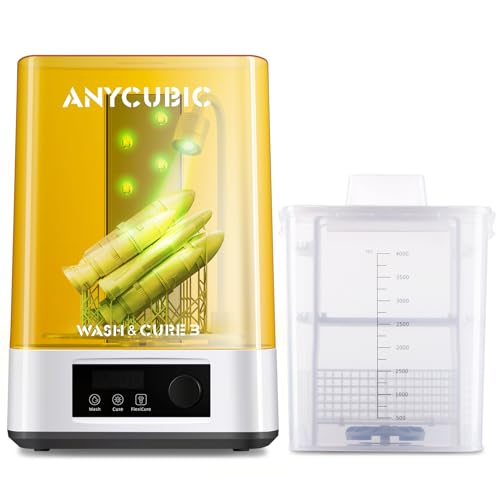
The Anycubic Wash and Cure 3 is the resin workflow product we would put in front of almost every small-printer beginner. It does not make resin harmless, but it turns post-processing into a repeatable station instead of a messy ritual spread across the whole bench.
Street check
$99
Decision snapshot
What this product actually solves
Print Climate reviews gear by the missing condition: drying, storage, enclosure control, resin boundaries, or abrasive hardware readiness.
8.8
fit score
Buy it for
- Combines the two resin post-processing steps most beginners underbuild: controlled washing and consistent curing.
- A dedicated station reduces the messy container shuffle that spreads uncured resin around a desk.
- Clear fit for small-format resin printers where a full industrial workflow is unnecessary.
Check first
- Does not replace gloves, eye protection, ventilation, or resin handling discipline.
- Wash-and-cure size must be checked against the largest build volume you actually print.
- A cleaner station can still become contaminated if tools and lids are not separated.
At a Glance
Best For
Fit check
Before this belongs in the cart
The right purchase should remove one specific workshop constraint. Use these checks before clicking through to Amazon.
Confirm
- Your printer and largest parts fit the wash basket and cure volume.
- You have nitrile gloves, eye protection, covered containers, and waste handling planned.
- You understand the station controls post-processing mess, not room air.
- You can keep wash, cure, dirty tools, and clean handling separated.
Pair with
- A resin enclosure or exhaust plan for the printer itself.
- Covered solvent containers and labeled waste for supports, wipes, and dirty IPA.
- Manufacturer safety documents for the specific resin being used.
Skip if
- You own a larger printer that needs Wash and Cure 3 Plus or a larger station.
- The printer would still run in a bedroom, kitchen, or heavily occupied room.
- You expect the station to replace PPE or ventilation.
Bench note
Overview
The Anycubic Wash and Cure 3 is the resin workflow product that turns messy improvisation into a repeatable station. It does not make resin harmless, and it does not solve ventilation. What it does well is give small-format resin users a defined place to wash, cure, time the process, and keep contaminated handling from spreading across the room.
That distinction matters for conversion. Many first resin buyers think the printer is the whole purchase. The Wash and Cure 3 makes the next truth visible: printing, washing, drying, curing, glove changes, solvent storage, and waste handling are separate steps.
Print Climate should recommend it as the best first wash/cure station for small resin printers, especially miniatures and compact models. Larger build plates may need the Wash and Cure 3 Plus, ELEGOO Mercury Plus V3.0, or another larger station.
The right buyer is not trying to make resin casual. They are trying to make resin procedural. This station earns its place when it keeps dirty parts, solvent, UV curing, and finished handling from collapsing into one improvised desk ritual.
Pros & Cons
Pros
- Combines the two resin post-processing steps most beginners underbuild: controlled washing and consistent curing.
- A dedicated station reduces the messy container shuffle that spreads uncured resin around a desk.
- Clear fit for small-format resin printers where a full industrial workflow is unnecessary.
- Better safety habit builder than improvising with random jars and inconsistent UV exposure.
Cons
- Does not replace gloves, eye protection, ventilation, or resin handling discipline.
- Wash-and-cure size must be checked against the largest build volume you actually print.
- A cleaner station can still become contaminated if tools and lids are not separated.
Design & Build Quality
The Wash and Cure 3 has a compact vertical footprint, a wash bucket, a cure platform, and a UV light arrangement designed for small LCD resin printers. Official specs list a 3 L cleaning basket, 4 L cleaning bucket, maximum cleaning volume around 165 x 100 x 180 mm, and a maximum curing volume of about 3.18 L.
Build quality is practical for a beginner resin bench. The value is not premium finish; it is containment and repetition. The buyer gets a bucket that belongs to resin work, a cure zone that is not a windowsill, and a timer that makes the process less random.
The most important physical check is not whether the station looks tidy in the product photo. It is whether the largest part, support raft, and typical build-plate workflow fit without forcing the user to drip resin across the bench. A station that is technically big enough for a model but too cramped for handling will not create the clean workflow buyers are trying to buy.
Performance & Specifications Deep Dive
The important specs are capacity, light coverage, and timer control. The Wash and Cure 3 is sized for small resin printers, not large Saturn-class plates. Any buyer with a bigger printer should measure the model, build plate, and wash basket before assuming fit.
The station uses 405 nm curing LEDs and timed cycles, including a gooseneck light intended to reach details that fixed lights can miss. That helps with miniatures, small figures, and parts with recessed surfaces. It still requires the user to wash correctly and let parts dry before curing.
No wash/cure station controls air. IPA and other wash solvents can emit when opened, and uncured resin remains a skin and eye hazard. This product improves handling discipline; it does not replace nitrile gloves, eye protection, ventilation, covered containers, or waste rules.
The station's performance is best judged by consistency. Does every print get the same wash time, the same drying pause, and the same curing routine? If yes, surface quality improves and handling mistakes decrease. If the user still opens random jars, moves wet parts across the room, and cures whenever they remember, the machine cannot fix the workflow.
Software & User Experience
The interface is intentionally simple: set a wash or cure time, run the cycle, and keep the dirty step in one place. That simplicity is why the station works for beginners. It removes the temptation to wash in random jars and cure on improvised surfaces.
The site should guide buyers into a clean-hand workflow. Gloves on for contaminated parts, wash, let solvent evaporate in a controlled spot, cure, then handle finished parts separately. The product is most valuable when it reinforces those boundaries.
The best setup has staging areas around the station: dirty tools on one tray, clean parts on another, covered solvent containers nearby, and waste separated before the print starts. The Wash and Cure 3 gives the workflow a center, but the surrounding tray discipline keeps that center from becoming another contaminated surface.
Real-World Use Cases
The strongest use case is a small resin printer used for miniatures, tabletop parts, dental-style models, jewelry masters, or small mechanical pieces. The station keeps the messy post-processing steps close enough to be repeatable without taking over an entire workbench.
It also fits apartment and spare-room users only if the resin printer already has an appropriate location, ventilation plan, and solvent discipline. Low odor is not low exposure. If the only available room is a bedroom or kitchen, the conservative recommendation is to move the printer, not to rely on a wash/cure station.
The weak use case is large-format resin. If the build plate or part size approaches the station limits, the workflow becomes awkward and splash-prone. Larger printers deserve a larger wash/cure station from the start.
A common real-world mistake is buying the resin printer, then trying to solve post-processing with food containers, a cheap UV lamp, and paper towels. That can work once, but it gets messy fast. The Wash and Cure 3 is for the buyer who wants the messy steps to have a repeatable home before print volume increases.
Who Should Buy (And Who Shouldn't)
Buy the Wash and Cure 3 if the resin printer is small, the buyer is new to resin, and the goal is a cleaner, repeatable post-processing routine. It is one of the easiest upgrades to explain because it gives the messy steps a defined home.
Skip it if the printer is large, if ventilation and PPE are not already planned, or if the user expects it to solve fumes. In those cases the first purchase should be source control, PPE, waste containers, and a larger station if needed.
This is also a strong buy when the household boundary matters. A dedicated station makes it easier to explain where resin work happens and where it does not. That is a trust advantage for a shared garage, utility room, or hobby room, even though it still does not make resin work suitable for food areas or bedrooms.
The cleanest buyer is someone who already accepts that resin is a workflow, not a single machine. They are buying repeatability: known wash time, known cure time, fewer loose containers, and a bench layout that makes dirty and clean steps easier to separate.
Alternatives Worth Considering
The Anycubic Wash and Cure 3 Plus is the obvious step up for larger printers. ELEGOO Mercury Plus V3.0 is another strong larger-format wash/cure alternative.
A resin enclosure with an exhaust path is the companion product for air and boundary control. PPE, covered solvent containers, and waste handling supplies are not optional accessories; they are part of the resin workflow.
If the buyer only has budget for one resin accessory beyond PPE, choose based on the missing boundary. If post-processing is the mess, buy the wash/cure station first. If odor and room exposure are the concern, solve enclosure and exhaust first. Most serious resin benches eventually need both.
The cheapest alternative is still manual washing and a standalone UV lamp, but that path depends heavily on the user's discipline. It can be acceptable for occasional tiny parts, yet it is easier to contaminate lids, tools, and table surfaces. The Wash and Cure 3 earns the affiliate recommendation because it reduces the number of improvised containers in the workflow.
Our Verdict
The Anycubic Wash and Cure 3 is the resin workflow product we would put in front of almost every small-printer beginner. It does not make resin harmless, but it turns post-processing into a repeatable station instead of a messy ritual spread across the whole bench.
| Full Specifications | |
|---|---|
| Category | Resin workflow |
| Role | Wash and cure station |
| Max Temp | 0C |
| Capacity | Small resin builds |
| Active Heat | No |
| Active Airflow | No |
| Humidity Readout | No |
| Print Through | No |
| Ventilation | No |
| Resin Workflow | Yes |
| Abrasive Ready | No |
| Best Materials | SLA/MSLA resin |
| Footprint | Post-processing station |
Frequently Asked Questions
Does the Anycubic Wash and Cure 3 make resin printing safe by itself?
What printer size is it best for?
Does a wash/cure station control fumes?
Should prints dry before curing?
Can I pour dirty IPA or resin water down the drain?
Should I buy the Wash and Cure 3 or the 3 Plus?
Where should the wash/cure station sit?
Does the station replace a resin enclosure?
Related Buying Guides
Compare With Similar 3D Printer Environment Upgrades
Head-to-Head Comparisons
Anycubic Wash and Cure 3
$99
Prices may change - check current Amazon listing.