Creality
Space Pi SE
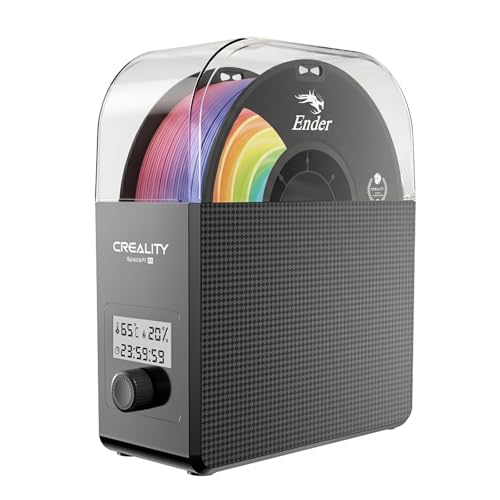
The Creality Space Pi SE is the value move for a bench that needs moisture diagnosis more than a permanent drying station. Buy it when you want to prove wet filament is the problem cheaply; step up to SUNLU S2, Space Pi Plus, or a multi-spool station when higher temperature, longer timers, or multiple rolls matter.
Street check
$39.99
Decision snapshot
What this product actually solves
Print Climate reviews gear by the missing condition: drying, storage, enclosure control, resin boundaries, or abrasive hardware readiness.
7.8
fit score
Buy it for
- Affordable entry point for users who need a real 65 C dryer before buying a full humidity-control setup.
- Compact enough for cramped desks, dorm benches, and one-printer workstations.
- Best fit for occasional PETG, PLA+, and TPU rescue cycles where multi-spool capacity is unnecessary.
Check first
- Weaker than newer 70 C Space Pi units and multi-spool stations for serious nylon or engineering-filament work.
- A lower-cost dryer still needs discipline: label materials, track cycles, and store dry rolls immediately.
- Limited station capacity means you will outgrow it if you print several materials every week.
At a Glance
Best For
Fit check
Before this belongs in the cart
The right purchase should remove one specific workshop constraint. Use these checks before clicking through to Amazon.
Confirm
- You are intentionally buying the budget 65 C class dryer, not the newer Space Pi Plus.
- The goal is PETG or PLA+ moisture diagnosis, not high-temperature engineering material drying.
- One spool at a time is acceptable for the next six months.
- You have a separate sealed storage plan after the drying cycle.
Pair with
- Budget dry boxes so the first successful dry cycle does not get wasted.
- A spool label with date, material, and whether the filament improved after drying.
- The SUNLU S4 or Space Pi Plus shortlist if this becomes a recurring multi-spool problem.
Skip if
- You already know you need two or four active spools controlled at once.
- Nylon, PA-CF, or other engineering materials are the reason for the purchase.
- You want the strongest Creality dryer story; Space Pi Plus or SpacePi X4 is the better research target.
Bench note
Overview
The Creality Filament Dryer Box 2.0 is the budget dryer for a buyer who wants proof before building a whole filament climate system. It is the product to recommend when the user has one printer, one suspect PETG spool, and a reasonable question: is this moisture, or am I just bad at slicer tuning?
Its biggest advantage is price-to-clarity. A compact heated dryer can turn a vague forum diagnosis into a controlled before-and-after test. If the same stringing test improves after drying, the next purchase is storage. If it does not, the user can stop blaming humidity and tune the printer.
This should not be framed as the best dryer for every serious material. The current listing is a budget 65 C dryer, not the newer 70 C Space Pi Plus or 85 C SpacePi X4 class. That honest framing is what makes it convert well: buyers know exactly when the cheaper product is enough and when they should step up.
The best copy angle is a moisture test kit, not a forever station. A buyer can dry one roll, rerun the same print, and learn something concrete about the room. That is a cleaner purchase rationale than promising that a small dryer will solve every material problem on the bench. It buys evidence before it buys a system that lasts on the actual bench.
Pros & Cons
Pros
- Affordable entry point for users who need a real 65 C dryer before buying a full humidity-control setup.
- Compact enough for cramped desks, dorm benches, and one-printer workstations.
- Best fit for occasional PETG, PLA+, and TPU rescue cycles where multi-spool capacity is unnecessary.
- Pairs well with sealed storage boxes: dry one spool, store the rest.
Cons
- Weaker than newer 70 C Space Pi units and multi-spool stations for serious nylon or engineering-filament work.
- A lower-cost dryer still needs discipline: label materials, track cycles, and store dry rolls immediately.
- Limited station capacity means you will outgrow it if you print several materials every week.
Design & Build Quality
The Dryer Box 2.0 is built around a small single-spool chamber. It is easy to fit beside a printer, under a shelf, or on a compact apartment desk. That makes it a better match for many first-time dryer buyers than a large multi-spool station.
The shell and controls are utilitarian. At this price, the user is buying heat, airflow, a chamber, and a more repeatable process, not a premium appliance. The most important physical detail is spool fit. Buyers using unusual oversized spools should check dimensions before assuming every roll will feed cleanly.
For a budget dryer, the inspection list is practical: lid fit, spool rotation, feed-hole alignment, fan sound, display readability, and whether the box can sit close enough to the printer for print-through use. If the spool rubs or the feed angle is sharp, the dryer can introduce drag that looks like an extrusion problem.
Performance & Specifications Deep Dive
The Dryer Box 2.0 sits in the 65 C budget class. That is enough for many PLA+, PETG, and TPU rescue cycles, but it is not as flexible as newer 70 C Space Pi units or the 85 C SpacePi X4 class for engineering-filament workflows. Its value is accessible active drying, not spec dominance.
The main limitation is station depth. A budget dryer generally gives less workflow headroom than a premium multi-spool unit. It dries one roll, then the user needs to store that roll or print from the dryer. If the room is humid and the spool goes back to an open shelf, the product did its job and the workflow failed.
Because the product is inexpensive, it also pairs well with bulk dry boxes. Print Climate should sell it as part of a small stack: Dryer Box 2.0 for active rescue, hygrometer boxes for storage, and labels for material/date discipline.
The 65 C ceiling matters. It is sensible for many everyday materials, but it leaves less margin for difficult nylon-family workflows that may need higher temperatures, longer dry times, and immediate sealed handling. That does not make the Creality a bad pick. It means the buyer should match the dryer to the material calendar rather than to the cheapest sale price.
Software & User Experience
The user experience is direct: load a spool, choose the appropriate cycle, and check the print again. That simplicity is useful for buyers who are overwhelmed by moisture advice. They do not need a spreadsheet before the first improvement.
The page should still nudge users toward process. A dryer is most valuable when the owner records the material, date, dry time, and result. Otherwise the same spool can fail again weeks later and feel like a new mystery.
The best beginner routine is one test spool, one known g-code file, and one note on the label. Run the print before drying, dry the spool, run the same print again, then move the spool into sealed storage. That turns the purchase into a diagnostic loop instead of another gadget on the bench.
The strongest UX message is not complexity. It is confidence. If the buyer can point to a labeled PETG roll and say it was dried yesterday, stored sealed, and still printed poorly, then the next troubleshooting step is more likely to be slicer, temperature, cooling, or filament quality.
Real-World Use Cases
The strongest Dryer Box 2.0 use case is occasional PETG. PETG often sits in the middle ground where moisture is real but not always obvious. A small dryer lets the user test without buying a four-spool station.
It is also good for small Bambu A1 or Ender-style desks where a multi-spool station would crowd the printer. The user can dry the material before the job, print through when needed, then move the spool to storage.
The weak use cases are weekly nylon, production TPU, and multi-spool color workflows. Those buyers will probably spend more later. For them, the Dryer Box 2.0 is a diagnostic tool, not the final climate plan.
Another good use case is a gift or first upgrade for someone who already owns the printer but has never owned drying gear. It is easier to explain than a full storage wall: put the suspect spool in the box, use a material-appropriate cycle, and compare the result. If the improvement is obvious, the next purchase becomes obvious too.
Who Should Buy (And Who Shouldn't)
Buy it if the user wants the lowest sensible entry into active drying, prints one spool at a time, and mainly needs to diagnose PETG, PLA+, or occasional TPU. It is also a good first purchase when the rest of the budget should go toward storage boxes.
Skip it if four rolls are open every week, if nylon is a core material, or if the bench already proved moisture is a recurring production problem. In that case, buying a newer Space Pi Plus, SUNLU S4, or other larger dryer first is less wasteful.
Also skip it if the buyer already knows the failure is storage, not drying. If every spool prints well after a dry cycle but gets worse on an open shelf, the next dollar should go to sealed boxes, fresh desiccant, and visible hygrometers.
This is a particularly good fit for buyers who are not sure they believe filament drying matters. The price is low enough to run the experiment. If it works, the buyer has proof and will be more willing to buy the storage pieces that make the fix last.
Alternatives Worth Considering
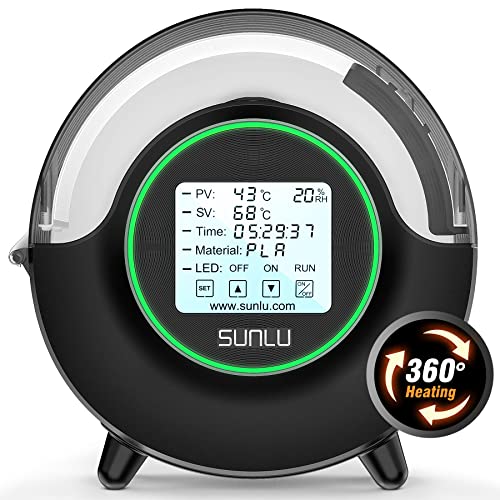
The SUNLU S2 is the stronger single-spool alternative when a 70 C ceiling matters. Creality Space Pi Plus is the better Creality step-up for two active rolls, while the SUNLU S4 is the step-up station for multi-spool users.
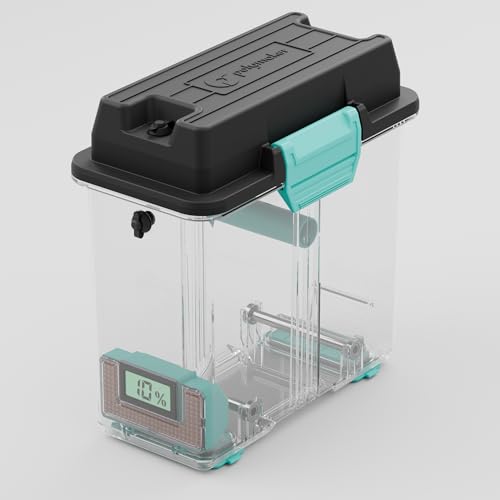
Polymaker PolyDryer is the better modular storage-first system. Generic dry boxes are cheaper but need a dryer in front of them if the spool is already wet.
The practical buying ladder is simple. Start with this Creality if the problem is occasional and budget-driven. Move to SUNLU S2 when hotter single-spool drying matters. Move to SUNLU S4 when multiple active rolls need heat, storage discipline, and a central station.
Our Verdict
The Creality Space Pi SE is the value move for a bench that needs moisture diagnosis more than a permanent drying station. Buy it when you want to prove wet filament is the problem cheaply; step up to SUNLU S2, Space Pi Plus, or a multi-spool station when higher temperature, longer timers, or multiple rolls matter.
| Full Specifications | |
|---|---|
| Category | Filament dryer |
| Role | Budget 65 C dryer |
| Max Temp | 65C |
| Capacity | 1 spool |
| Active Heat | Yes |
| Active Airflow | Yes |
| Humidity Readout | Yes |
| Print Through | Yes |
| Ventilation | No |
| Resin Workflow | No |
| Abrasive Ready | No |
| Best Materials | PLA+, PETG, TPU |
| Footprint | Small bench box |
Frequently Asked Questions
Is the Creality Filament Dryer Box 2.0 a real dryer or just a dry box?
Is this the best budget pick for PETG?
Should nylon users buy this dryer?
Do I still need dry storage?
What is the biggest reason to skip it?
Can I print directly from the dryer?
What should I buy after this dryer?
Is this enough for a serious multi-material bench?
Compare With Similar 3D Printer Environment Upgrades
Head-to-Head Comparisons
Creality Space Pi SE Filament Dryer
$39.99
Prices may change - check current Amazon listing.